


Downtown Springfield is the urban heart of Western Massachusetts.
Why families are choosing Western MA over Greater Boston
|
For families who want more space without leaving Massachusetts, the search doesn’t stop at Greater Boston. In Western Massachusetts, housing budgets can often stretch further, offering larger homes and lots along with easier access to the outdoors.
Moving west does come with tradeoffs, particularly for those who commute into Boston regularly. But with greater flexibility in where and how you work, the region can offer a combination of space, value, and lifestyle that’s increasingly difficult to come by near the city.
More space can change the home search
Housing is usually one of the first differences buyers notice when they start comparing Greater Boston with Western Massachusetts. The contrast shows up not only in price, but also in the types of homes available, lot sizes, neighborhood density, and how much space you may get for your budget.
Greater Boston is one of the most expensive housing markets in the state. The median listing price of a single-family home in the area is about $900,000. A search closer to Boston typically shows more condos and attached homes, smaller lots, or homes packed more closely together, especially at lower price points.
Western Massachusetts, on the other hand, includes many communities where prices are considerably lower, giving buyers more room to work with. In Springfield, for example, the current median listing price is about $330,000. Depending on the town and budget, looking west can open the door to detached homes, larger yards, an extra bedroom, or just more space between neighbors.
Daily life can feel less compressed
Moving away from Greater Boston doesn’t mean giving up convenience or connection. Western Massachusetts has cities, suburbs, college towns, rural communities, and small Berkshire downtowns. What changes is the scale.
In Northampton, you can build an afternoon around downtown shops, restaurants, galleries, and performances. Amherst has the energy that comes with a major university and college community. Springfield offers museums, employers, entertainment, and city neighborhoods. Head into the Berkshires and the landscape changes again, with smaller town centers, mountains, forests, and more rural roads.
There’s also something appealing about living in a place where day-to-day routines can feel easier to manage. Local businesses, parks, schools, downtowns, and community events are often close enough to become part of the regular week rather than something you have to plan around. Over time, that can also create a stronger sense of familiarity, as the same shops, gathering places, and local events become part of your routine.
Read more: 7 Distinctive communities that define Western Massachusetts living
Education goes beyond a school rating
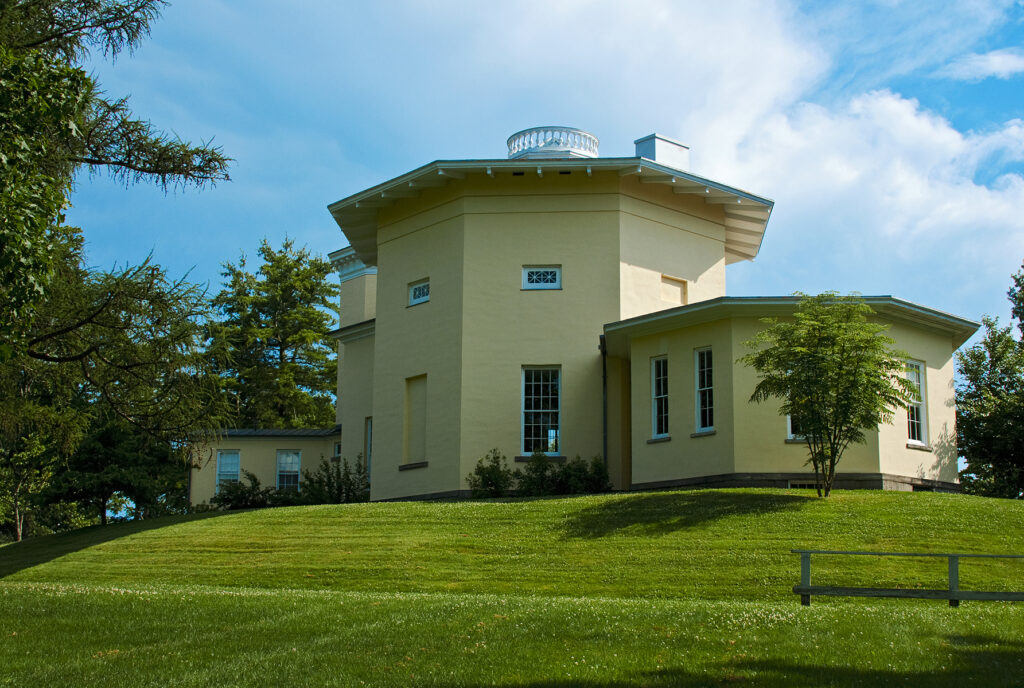
The Octagon is one of Amherst College’s most distinctive historic buildings
Schools are often one of the first things families look at when they’re considering a move. But a rating or ranking only tells part of the story. Western Massachusetts gives families a lot to consider. Public school districts vary from town to town, and there are also private schools, vocational and technical programs, and other educational options across the region.
Higher education is a big part of life in the Pioneer Valley. The Five College Consortium connects Amherst College, Hampshire College, Mount Holyoke College, Smith College, and UMass Amherst. Together, those institutions contribute lectures, performances, museums, libraries, cultural programs, and academic activity throughout the Pioneer Valley.
Getting outside doesn’t have to be a major production
One of the big draws of Western Massachusetts is how easy it can be to spend time outdoors. Across the region, you’ll find state parks, forests, rail trails, lakes, rivers, and conservation areas. The Berkshires add even more options, from hiking and camping to skiing in the winter.
The difference is that getting outside doesn’t always have to take up the whole day. Depending on where you live, a Saturday might mean a bike ride on a rail trail, a walk through a nearby conservation area, an afternoon by the water, or a quick drive to a trailhead. Farms, orchards, and seasonal activities also give families plenty of reasons to get out of the house throughout the year.
Community life has its own local flavor
Western Massachusetts has a lot of variety packed into the region. Northampton is known for its arts scene and walkable downtown while Amherst has more of a college-town feel. Easthampton has old mill buildings, studios, and independent businesses. Springfield offers a more urban setting, and farther west, Lenox and Great Barrington bring their own mix of culture, restaurants, history, and Berkshire scenery.
The best places to live in Western Massachusetts will depend on what you want close to home and how you like to spend your time. For some buyers, an active downtown is essential. Others would rather have a larger property and don’t mind a longer drive for dinner. Some want concerts, museums, and restaurants nearby. Others picture their weekends around trails, local sports, farmers markets, or time at home.
The advantage of being in Western Massachusetts is having enough variety within the region to decide what matters most to you.
Is Boston still part of the equation?
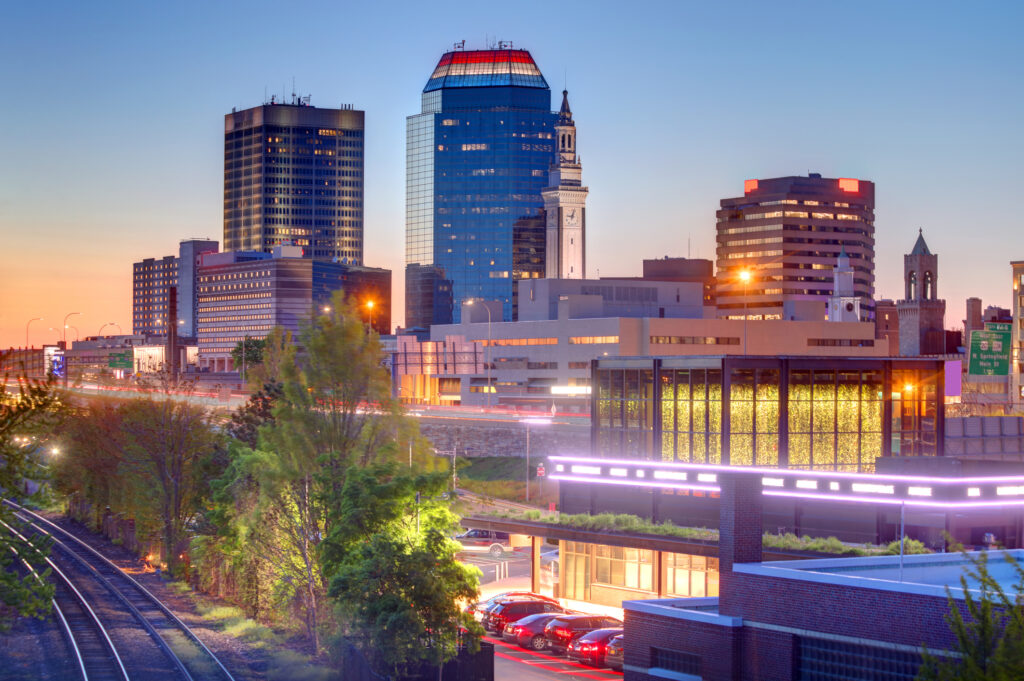
Springfield in Western MA is a major commercial hub in Western Massachusetts, offering employment opportunities beyond Boston.
If you’re thinking about moving west, one of the first questions to ask is: How often do you actually need to be in Boston? From Springfield, the drive is roughly an hour and a half under typical conditions, while Northampton and Amherst are closer to an hour and 45 minutes. Head farther west into the Berkshires, and the trip can stretch beyond two hours.
If you’re commuting into the city every day, that could be a significant tradeoff. But if you work remotely, only go into Boston once or twice a week, or your job is based elsewhere, living farther west may be much easier to consider.
Western Massachusetts doesn’t lack work opportunities. Springfield is a major employment center, while nearby Hartford, Connecticut provides access to another major job market, particularly in insurance, healthcare, government, and financial services. The region also has universities, hospitals, public-sector employers, tourism businesses, and local companies that support a wide range of careers.
FAQsIs the cost of living lower in Western Massachusetts apart from housing? Property taxes, utilities, childcare, insurance, and transportation costs depend heavily on the town and the type of home you choose. It’s best to compare the full monthly picture rather than assuming everything will automatically cost less once you move west. Do you need a car to live in Western Massachusetts? In most communities, having a car makes daily life much easier. Some downtown areas such as Northampton and parts of Amherst or Springfield are more walkable and have public transportation options. However, Western Massachusetts is generally more car-dependent than Greater Boston. What should buyers know about older homes in Western Massachusetts? Older housing is common across the region. You’ll find historic Colonials, Victorians, farmhouses, and other homes with plenty of character. What are winters like in Western Massachusetts compared to Greater Boston? Western Massachusetts experiences colder winters and, in many areas, more snow than communities closer to the coast. The Berkshires can feel especially wintry because of elevation and terrain. |
Expanding your home search to Western MA opens up different possibilities
Moving beyond Greater Boston may not be for everyone. But if you’re starting to want more space, a different kind of neighborhood, easier access to the outdoors, or a home that gives you more room for your budget, Western Massachusetts real estate is worth a closer look.
We can help you narrow down the towns, neighborhoods, and properties that make the most sense for your next move. Get in touch with Craig Machnik and the TODAY Real Estate team via email or visit our contact page.