


Boston real estate puts parks, transit, dining, and city amenities within easy reach.
For many buyers looking to put down roots in or around Boston, the search often comes down to three distinct choices: the energy of Boston proper, the space and residential feel of the inland suburbs, or the coastal lifestyle of the North Shore. Each offers a different way to experience Greater Boston—and choosing among them is more than about commute times or square footage.
It’s about deciding what you want everyday life to look and feel like. By comparing Boston, the suburbs, and the North Shore side by side, you can better understand what each offers and find the setting that best aligns with the life you want to build.
Read our community guide: Greater Boston and the North Shore
TABLE OF CONTENTS
What can your budget buy in Boston vs. the North Shore vs. the suburbs?
When deciding where to live in Greater Boston, you’ll come across a wide range of home sizes, architectural styles, and amount of living space available across different submarkets. Here’s a snapshot of what your budget can buy you in each area:
- Under $750,000 (Entry to mid-level): In Boston, buyers are more likely to find condos, with size, condition, and location varying considerably by neighborhood. Single-family homes also appear at this price point in some parts of the city. In the suburbs and North Shore, the range of possibilities can expand to include larger condos, townhomes, and some single-family homes, depending on the community.
- $750,000 to $1.5 Million (Mid to high-tier): In Boston, this range opens up more options across condos, townhomes, and single-family homes, with the amount of space varying significantly by neighborhood. In the suburbs and North Shore, buyers may find a broader selection of single-family homes with additional bedrooms, yards, garages, or dedicated workspaces, although purchasing power differs substantially from town to town.
- $1.5 Million+ (Luxury tier): In Boston, buyers can explore luxury condos, larger single-family and attached homes, and properties in some of the city’s most sought-after neighborhoods. In higher-priced suburbs and coastal North Shore communities, this budget can open the door to larger single-family properties, distinctive historic homes, and, at higher price points, select waterfront or water-view properties.
How does everyday life differ between the three areas?

North Shore communities pair classic New England streetscapes with charming downtowns, coastal access, and connections to Boston.
Beyond prices and property styles, each region shapes your daily schedule, social calendar, and weekend routines differently:
- In Boston, much of daily life can happen on foot or by public transit. Weekdays might mean walking to work, picking up groceries or running errands nearby, and meeting friends for dinner without planning around parking or drive times. On weekends, the city becomes part of your routine—staying over coffee at a neighborhood café, strolling on greenways and harbor paths, or simply enjoying the freedom that comes with low-maintenance city living.
- Life in the Boston suburbs means enjoying more space at home and easy connection with the community. Weekdays might balance commutes into Boston or nearby employment areas, school and family schedules, and errands around town before ending in quieter evenings at home. On weekends, the pace opens up, with more time for town parks, local farm stands, youth sports, community events, or simply entertaining in your own backyard.
- On the North Shore, daily life is shaped by the connection between coastal surroundings and vibrant town centers. Weekdays often combine local work or train commutes into Boston with easy evenings by the water. Weekend routines are centered entirely on the coast—spending time at local beaches, getting out on the harbor, or visiting downtown shops and restaurants. (Read more: Coastal living on the North Shore: What homebuyers should know)
Which area fits your housing needs and long-term plans?
Choosing where to live in Greater Boston isn’t just about what works for you today. It’s also worth thinking about how well a location can fit your life and investment goals in the years ahead. As you compare Boston, the suburbs, and the North Shore, consider how each option supports your need for space, the lifestyle you want, and your longer-term plans:
| Region | Space profile & lot allocation | 5–10 year lifestyle adaptability | Long-term asset & value profile |
|---|---|---|---|
| Boston |
Generally denser housing, with condos, historic townhouses, multi-family properties, and single-family homes offering a wide range of living spaces. Private yards, larger lots, and dedicated parking are less common than in the suburbs, particularly in central neighborhoods. |
Best suited to buyers who value proximity to work, transit, dining, and city amenities. Changing space needs may eventually influence whether the home still fits. |
Location and limited housing supply support long-term appeal, but condo buyers should account for association fees, reserves, potential assessments, and building-specific maintenance. |
| The suburbs | Often provides more opportunities for additional square footage, dedicated workspaces, garages, basements, and private yards, although housing varies considerably by community. | Additional space can provide flexibility as household, work-from-home, or lifestyle needs change. | Property’s maintenance may fall directly to the homeowner, making it important to budget for larger expenses such as roofing, siding, heating systems, and yard upkeep. |
| North Shore | Housing ranges from compact homes near established town centers to larger properties with more land, with coastal proximity varying considerably by community. | Can suit buyers looking for more space while maintaining access to established towns, outdoor recreation, and the coast. |
Coastal proximity can add lifestyle and resale appeal. Buyers of properties near the water should evaluate flood exposure, insurance needs, and weather-related maintenance on a property-by-property basis. |
How to decide between Boston, the suburbs, and the North Shore
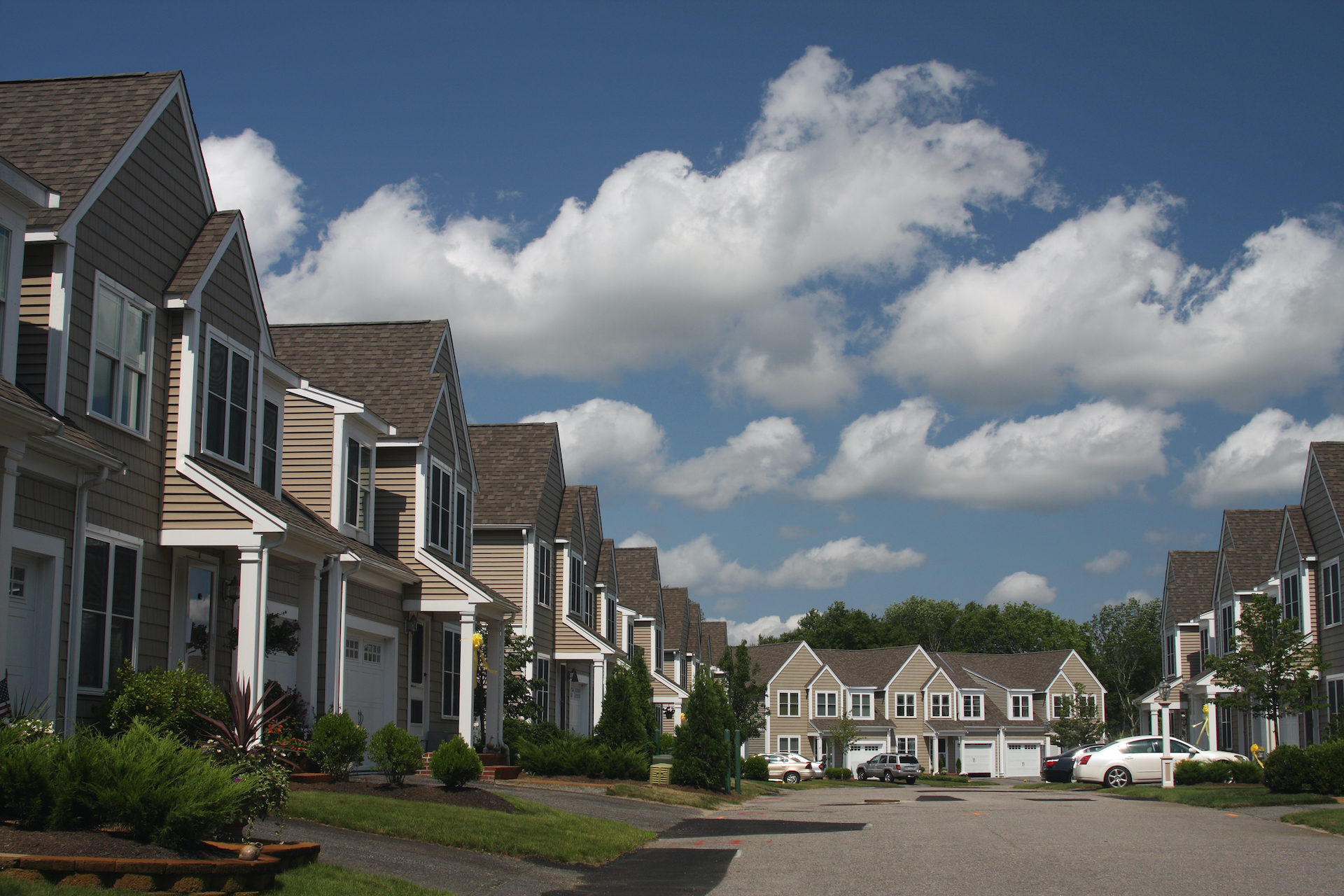
Greater Boston suburbs offer more residential space while keeping the city within reach for work, dining, and entertainment.
Narrowing down the best places to live near Boston starts with identifying your biggest daily non-negotiable—whether that’s travel time, total square footage, or environment. Know the trade-offs of living in each area and weigh which feels easiest to manage:
- Choose Boston if city access comes first. Focus your search here if your daily routine depends on walking to work, relying on public transit, or having immediate access to dining and entertainment. Living in the city is a great choice if you want to eliminate or minimize daily drives, prefer predictable HOA maintenance over handling repairs yourself, and plan to maximize the local parks and neighborhood amenities around you.
- Focus on the suburbs if you need more space. Look outside the city center if your priorities include extra bedrooms, private yards, multi-car garages, and flexible layouts for a growing household. While living here may mean taking on more home maintenance and managing longer highway commutes, it delivers significantly more space and long-term functional flexibility.
- Look to the North Shore if you want a boat, beach, or seaside downtown routine. Communities like Salem, Beverly, Marblehead, and Gloucester work well if you want a day-to-day routine centered on local downtowns, harbors, and beaches. This region gives you more room to stretch out than the city while keeping a direct link to downtown Boston via the MBTA Newburyport/Rockport Commuter Rail lines—ideal if you want an active coastal environment and don’t mind a train-dependent routine.
FAQsIs buying outside Boston always less expensive? No. While moving outside the city generally buys you more square footage, prime inner-ring suburbs and coastal North Shore towns often match or exceed Boston prices. You’ll want to look at total ownership costs—like local property taxes, HOA fees, and commutes—rather than assuming distance brings a discount. Should I choose the location or the house first? Pick your location boundaries first, then shop for the house. You can renovate or expand a home over time, but you can’t change its neighborhood, commute, or convenience to your daily routines. How can I narrow down my options on where to live in Greater Boston? Start by filtering for your non-negotiables: budget, travel time, required space, and lifestyle needs. Once you have a shortlist, test drive those communities by visiting during a peak weekday rush hour to see how the routine actually feels. What should I compare when two communities fit the same budget? Look past the price tag to see what your money actually yields in square footage, lot size, and home condition. Then, factor in total ownership costs like local property taxes, insurance, condo fees, and daily transit expenses. |
Which Greater Boston lifestyle fits you best?
Deciding where to live comes down to finding the community that fits how you actually want to spend your days, whether that means a walkable city neighborhood, extra room to spread out in the suburbs, or a weekend routine by the water.
Bringing deep roots across the region, Craig Machnik and the team at TODAY Real Estate deliver the local insight you need to choose the right town—not just the right house.
When you’re ready to start looking, connect with the team via email or visit our contact page and schedule a consultation.